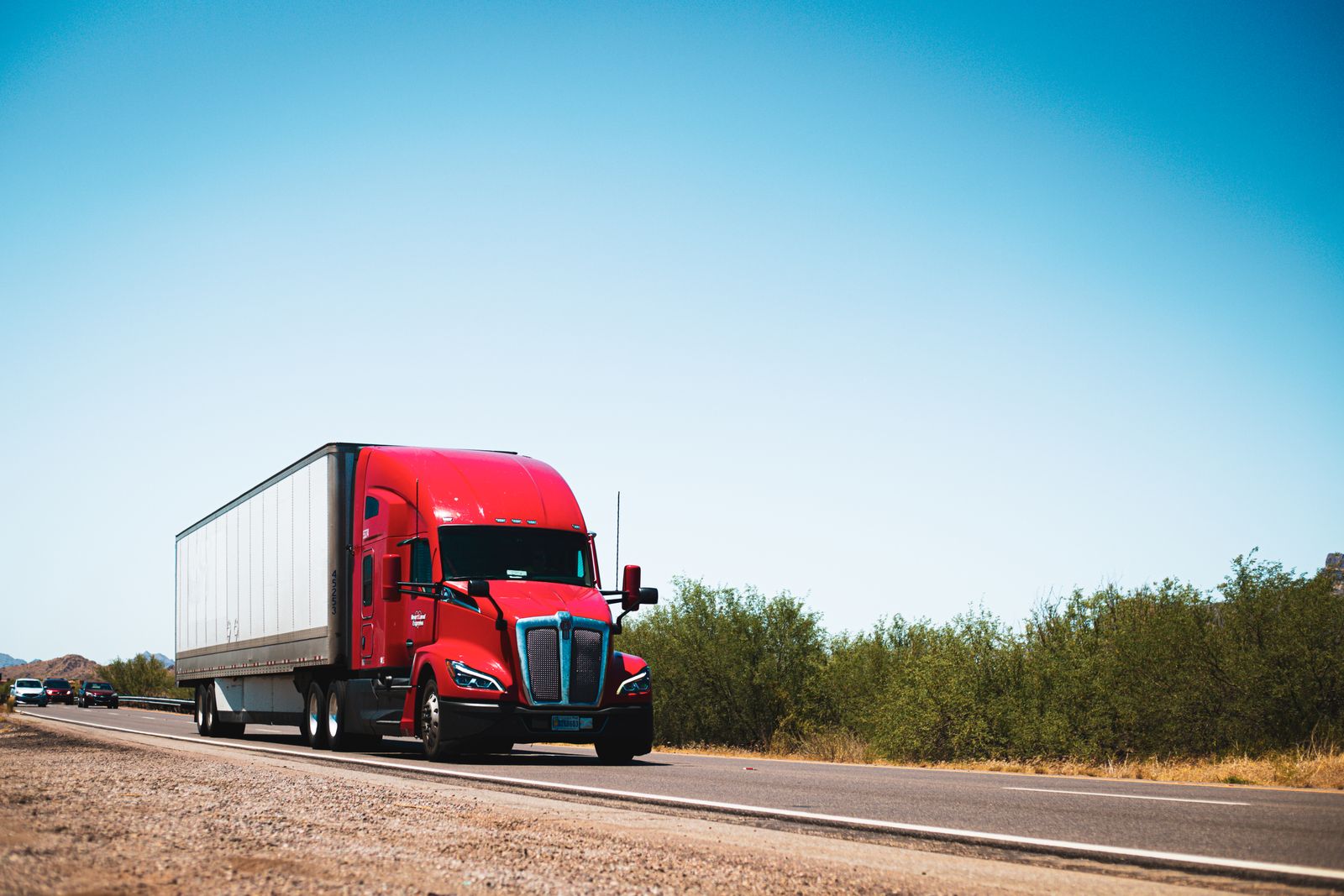
The instinct after a truck wreck is to look for the driver. And the driver is often part of the answer. But an 18-wheeler on a Texas highway is the end of a long chain of business decisions — who to hire, what to haul, whether to fix the brakes, how hard to push a delivery deadline. When one of those decisions is a careless one, the person who made it can share the blame for the crash, even if they were nowhere near the scene.
That’s the single biggest difference between a truck case and an ordinary car wreck. In a car crash, you usually have one driver and one insurance policy. In a truck crash, you may have several at-fault parties and several layers of insurance — and finding all of them is often the difference between a recovery that covers your life and one that runs out before your medical bills do.
Here’s who can be held liable after a commercial truck crash in Texas.
The truck driver
The most obvious place to start. A driver who was speeding, following too closely, distracted, fatigued, impaired, or ignoring the conditions can be held responsible for the crash the same way any negligent driver can. Commercial drivers are also held to federal rules that don’t apply to the rest of us — limits on how many hours they can drive, requirements to inspect the truck before a trip, and medical-qualification standards. When a driver breaks one of those rules and it causes a wreck, that violation can become powerful evidence of negligence.
But the driver is frequently the least valuable defendant in the case. They’re an employee. The deeper responsibility — and the deeper insurance — usually sits with the company behind them.
The trucking company (motor carrier)
A trucking company can be on the hook two different ways, and the distinction matters in Texas.
The first is vicarious liability — the legal rule (respondeat superior) that an employer is responsible for the negligent acts its employees commit on the job. If the driver was working for the carrier and caused the wreck in the course of that work, the company answers for it.
The second is the company’s own negligence, separate from the driver’s. A carrier that hires a driver with a dangerous record, skips training, ignores a pattern of safety violations, pushes unrealistic delivery schedules, or puts a poorly maintained truck on the road has done something wrong itself. These are negligent-hiring, negligent-supervision, negligent-retention, negligent-entrustment, and negligent-maintenance claims.
There’s a Texas wrinkle worth understanding here. Under a 2021 law (House Bill 19, now Chapter 72 of the Civil Practice and Remedies Code), a trucking company can move to split the trial into two phases and, if it timely stipulates that the driver was its employee acting within the scope of the job, the first phase is limited to respondeat superior rather than the company’s direct negligence in hiring or entrusting. It’s a defense-friendly rule designed to keep a carrier’s bad safety history away from the jury early. It doesn’t make the company’s own misconduct disappear — gross negligence and exemplary damages are tried in the trial’s second phase — but it does change how and when that evidence reaches the jury. It’s also a big reason these cases need a lawyer who tries trucking cases specifically, not a general practitioner.
The freight broker
Many loads aren’t booked by the trucking company at all. They’re arranged by a freight broker — the middleman who matches a shipper’s freight with a carrier to haul it. When a broker puts an unsafe carrier on the road despite red flags in its federal safety record, the people that carrier hurts may have a claim against the broker too.
For years brokers argued they were untouchable under a federal preemption statute. That defense took a serious hit in May 2026, when the U.S. Supreme Court held unanimously that federal law does not wipe out state negligent-hiring claims against brokers when the theory is rooted in motor-vehicle safety. We wrote about that decision and what it means for Texas families here: what the Supreme Court’s unanimous broker liability ruling means for Texas truck accident victims. For crashes involving an undercapitalized or judgment-proof carrier, the broker can be the difference between a real recovery and an empty one.
The shipper and the cargo loader
Sometimes the danger is the load itself. If cargo is overloaded, unbalanced, or poorly secured and it shifts, spills, or throws the truck out of control, the company that loaded or secured it can share responsibility for the crash. Depending on the arrangement, that might be the shipper, a separate loading company, or a warehouse contractor — not the carrier. This matters most in rollover and jackknife cases, where how the freight was stacked and strapped can be the whole story.
The maintenance provider or parts manufacturer
Trucks that run hundreds of thousands of miles depend on brakes, tires, steering, and coupling equipment that actually work. When a shop performs shoddy repairs, or a defective part fails, the company that serviced the truck or manufactured the component can be liable for a crash the failure caused. A tire that shreds or brakes that don’t hold at highway speed leave physical evidence — which is one more reason the truck itself needs to be preserved and inspected before it’s repaired or scrapped.
Government entities and other third parties
Less often, a crash traces back to something other than the trucking operation — a dangerously designed interchange, a missing sign, a construction zone that wasn’t marked, or another driver who triggered the chain reaction. Claims against a Texas government entity come with their own strict, short deadlines and immunity rules, which is another reason to get these cases evaluated quickly rather than assuming there’s only one place to look.
Why finding every at-fault party matters
Two Texas realities make this more than an academic exercise.
First, insurance layers. Federal law requires interstate carriers to carry at least $750,000 in liability coverage for general freight, and $1 million to $5 million for hazardous materials. A catastrophic truck crash can blow past a single policy. Bringing in the carrier, the broker, or a loader can open additional coverage that a claim against the driver alone never reaches.
Second, Texas fault-sharing. Under the state’s proportionate-responsibility rule, your recovery is reduced by your share of the blame — and if you’re found more than 50 percent at fault, you recover nothing (Tex. Civ. Prac. & Rem. Code § 33.001). Trucking companies and their insurers know this, and their investigators are working from the first hours to shift as much blame onto you as possible. Identifying every party who actually contributed to the crash is how you keep the fault where it belongs.
The evidence that proves all of this disappears fast
Driver qualification files, hours-of-service logs, the truck’s electronic control module (“black box”), inspection reports, dashcam footage, and the broker’s carrier-vetting file are what tie each of these parties to the crash. The catch is that the companies control those records, they’re only required to keep many of them for a limited time, and a carrier facing a serious claim has every incentive to let the clock run. Getting a lawyer involved early — someone who sends a preservation letter before those records age out — is often what makes the difference. (We covered how 2026’s federal rule changes reshaped that evidence trail here.)
In Texas, you generally have two years from the date of the crash to file suit under Tex. Civ. Prac. & Rem. Code § 16.003 — but shorter deadlines can apply when a government entity is involved. The Texas Tort Claims Act carries its own notice requirement, and some cities’ charters cut that window much shorter — in some cases to as little as 90 days. Those clocks can start running long before the two-year deadline, which is one more reason not to wait.
Talk to a Fort Worth truck accident lawyer
An 18-wheeler wreck isn’t a bigger car accident — it’s a different kind of case, with more defendants, more insurance, and a company that had people protecting its interests before the wreckage was cleared. Our Fort Worth truck accident lawyers know how to find every party responsible, preserve the records that prove it, and keep the blame off you. If a crash took someone you love, our Fort Worth wrongful death attorneys are here too. The consultation is free, and you pay nothing unless we win. Call Patterson Law Group today.
This post is for general information only and is not legal advice. Laws change and every case is different. Consult a licensed attorney about your specific situation.